
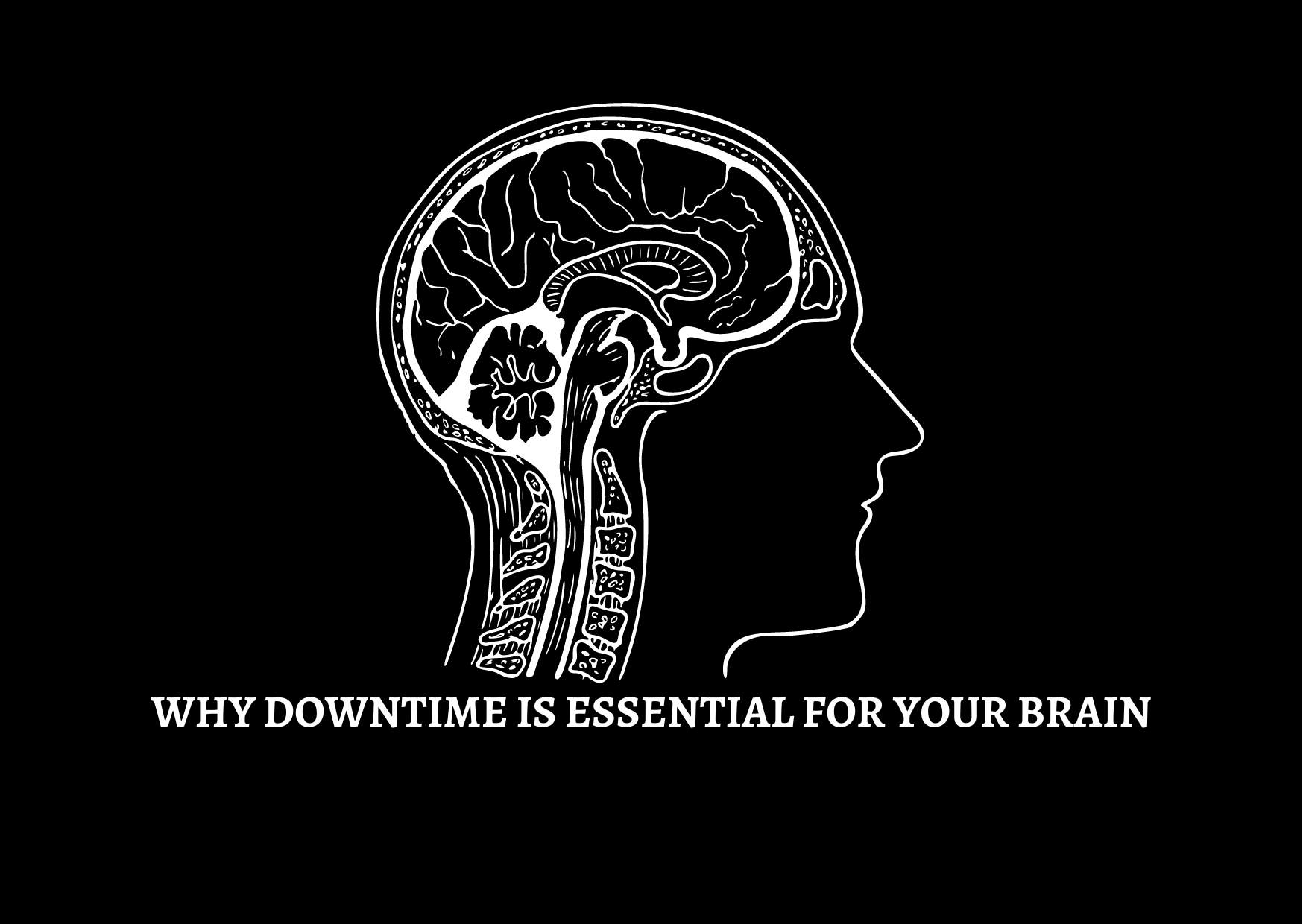
In a world that celebrates productivity, downtime is often misunderstood.
Many professionals feel guilty when they’re not working, responding to emails or ticking tasks off a never-ending to-do list.
We’ve become conditioned to believe that being busy equals being productive. But the reality is very different.
Downtime isn’t wasted time. It’s an essential part of maintaining brain health, preventing burnout and performing at your best.
Research consistently shows that giving your brain regular opportunities to rest can improve focus, creativity, decision-making and overall mental wellbeing.
If you’ve been pushing hard all year, here are seven reasons why downtime might be one of the most productive things you can do.
1. Rest improves concentration
Have you ever struggled with a problem for hours, only to find the solution after stepping away?
That’s because your brain continues processing information even when you’re not actively focused on a task.
Regular downtime allows your mind to reset, making it easier to concentrate when you return to work.
2. Taking time off helps prevent burnout
Burnout doesn’t happen overnight.
It often develops gradually through prolonged periods of stress, pressure and mental fatigue.
One of the most effective forms of burnout prevention is creating space for genuine mental recovery.
Taking time off or booking your annual leave, gives your brain an opportunity to recharge before stress becomes overwhelming.
3. Your brain needs rest to perform at its best
We readily accept that our bodies need sleep and recovery after physical exertion.
The same principle applies to the brain.
Without regular periods of rest, mental performance begins to decline. Decision-making becomes slower, concentration weakens and problem-solving becomes more difficult.
Rest isn’t a reward. It’s a requirement.
4. Downtime boosts creativity
Some of our best ideas emerge when we’re not actively trying to think of them.
This is because it activates what neuroscientists refer to as the brain’s “default mode network” a state associated with reflection, creativity and insight.
Many breakthrough ideas occur while walking, showering, gardening or performing simple everyday tasks.
5. Taking breaks improves productivity
Many people assume that working longer hours automatically leads to better results.
In reality, the opposite is often true.
Regular breaks can improve productivity by allowing your brain to recover and return to tasks with greater energy and focus.
The goal isn’t to work more.
It’s to work better.
6. Downtime supports mental wellbeing
Constant stimulation can leave us feeling overwhelmed and mentally exhausted.
Whether it’s emails, social media, meetings or notifications, our brains rarely get an opportunity to switch off.
Taking considered time to switch off is essential as it creates space to process thoughts, reduce stress and support overall mental wellbeing.
It’s one of the simplest yet most effective ways to improve your relationship with work and life.
7. Doing less can sometimes achieve more
Many people confuse downtime with leisure activities.
While reading, socialising, solving puzzles or visiting a museum are all valuable activities, they still require mental engagement.
True downtime often involves doing very little.
That might mean:
- Sitting quietly
- Taking a walk
- Gardening
- Looking out the window
- Completing simple household tasks
The goal is to give your brain a chance to wander without a specific objective.
This is where genuine mental recovery happens.
Why downtime matters more than ever
Modern life places constant demands on our attention.
We’re expected to be available, responsive and productive almost all the time.
But our brains weren’t designed to operate at maximum capacity indefinitely.
Downtime isn’t laziness.
It’s a critical part of maintaining brain health, improving performance and preventing burnout.
So the next time you find yourself feeling guilty for taking a break, remember this:
The most productive people aren’t necessarily the busiest.
They’re often the ones who understand when it’s time to pause, recover and allow their minds the space they need to perform at their best.
Because sometimes the smartest thing you can do is absolutely nothing at all.
If you’re interested in finding a new role that embraces work life balance, submit your CV to one of our specialist consultants who can help.